A woman recovering from a mommy makeover told us she had booked a post-operative massage through a social media page, arrived at an apartment, and spent the session increasingly sure that the person working on her had learned the technique from videos. She could not point to anything dangerous that happened. She also could not shake the feeling, and she never went back.
We would like to say that story is unusual. In Los Angeles, where "post-op massage" has become a cottage industry that anyone with a folding table can enter, it is not. And after surgery the stakes are different: the tissue is healing, the immune system is busy, and the person touching you is making decisions about pressure and direction that a weekend course does not teach.
So this is the article we wish every client had read before their first booking anywhere. It takes about ninety seconds to act on.
How massage certification works in California
California does not license massage therapists through a state medical board the way it licenses nurses. Instead, the state created the California Massage Therapy Council — CAMTC — which issues a statewide certification to practitioners who complete a minimum number of hours of approved education, pass a background check, and meet the council's standards. Most cities and counties in Los Angeles County recognize that certification as the basis for a local permit, and many require it outright.
The practical upshot: a legitimately practicing massage therapist in this area should be able to show you a current CAMTC certificate, and you can check it yourself. The council maintains a public lookup on its website where you can search by name or certificate number and see whether the certification is active. If the person you are about to book cannot give you a name that returns a result, that tells you something before any hands are involved.
What the certificate does not tell you
Verification is the floor, not the ceiling. Three things the paperwork cannot show you, and that matter more once you are recovering from a procedure:
- Whether they know post-operative work specifically. The statewide certification covers massage broadly. Lymphatic drainage after surgery is its own discipline — different pressure, different sequence, different judgment about when to stop and send you back to your surgeon. Ask how many post-operative clients they see and for how long they have been doing it.
- Whether they work with surgeons or around them. A therapist who asks for your surgeon's instructions, follows them, and knows which questions belong in a surgical office is working inside a system. One who has an opinion on everything from your garment stage to your medication is working outside it.
- Where the work happens. A dedicated studio with a business address, a booking system, and a paper trail is easier to hold accountable than a folding table in a living room. That is not snobbery; it is what you would want if anything went wrong.
How we make ourselves easy to check
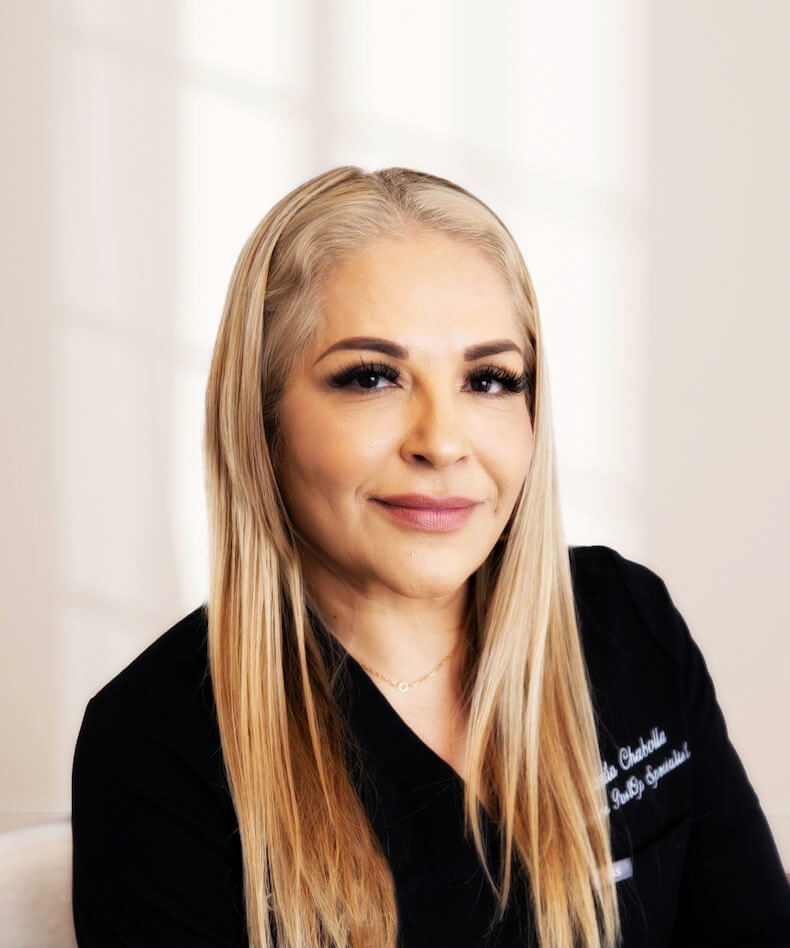
- A named, licensed practitioner. Every session at Lymphyx is with Juanita Chabolla, licensed massage therapist, who has practiced for fifteen-plus years alongside Los Angeles surgeons. Her name is on the door, on the booking page, and on every article on this site. Look her up.
- A fixed studio with a public address. Suite 306 at 9150 Wilshire Boulevard in Beverly Hills, less than a mile from Cedars-Sinai and inside the corridor where many of our clients' surgeons practice. Not a rotating rental, not a house call from an unknown address.
- Surgeon-led plans. We work under the care of your physician. When drainage starts, how often, and what changes when are your surgeon's calls, and we say so plainly.
- Written intake and consent. Our client forms exist so that what you have had done, and what you have agreed to, is on record before the first session.
Typical versus what to look for
| What you are checking | A pattern clients describe | What we practice |
|---|---|---|
| Certification | Cannot name a certificate; "trained online" | Named licensed massage therapist you can look up |
| Post-op experience | Unclear, or a recent add-on to a menu | Fifteen-plus years alongside Los Angeles surgeons |
| Location | Apartment, hotel, or an address that changes | A fixed studio suite on Wilshire Boulevard |
| Relationship to your surgeon | Overrides or ignores the surgeon's plan | Follows the surgeon's protocol; sends medical questions back to them |
| Paper trail | DMs and cash | Booking system, intake and consent forms |
The ninety-second verification checklist
Run this on anyone before your first post-operative session — including us.
- Ask for the therapist's full name and confirm an active certification on the CAMTC public lookup.
- Ask how long they have done post-operative lymphatic work specifically, and how many clients they see for it.
- Ask whether they will follow your surgeon's written instructions and what would make them send you back to your surgeon.
- Confirm a fixed business address and a booking system with a record of your appointment.
- Ask what intake and consent forms you will complete before the session.
None of these questions offend a professional. They are the questions a professional wants to be asked, because they are the questions that separate the work from the imitation of it. Your post-operative care deserves the ninety seconds.