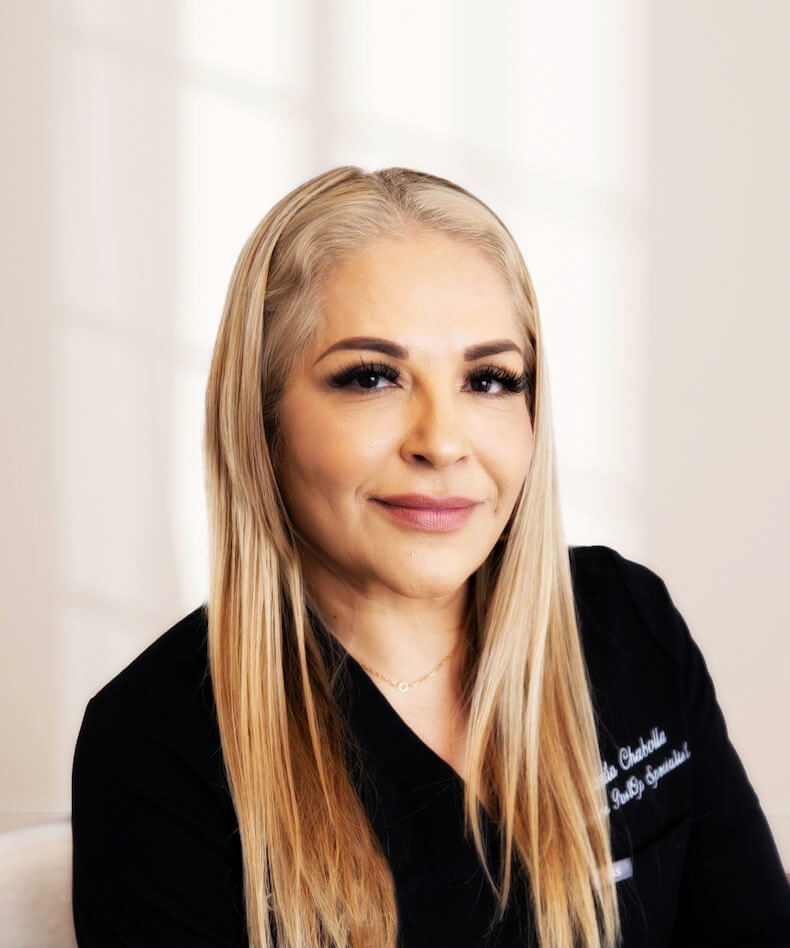
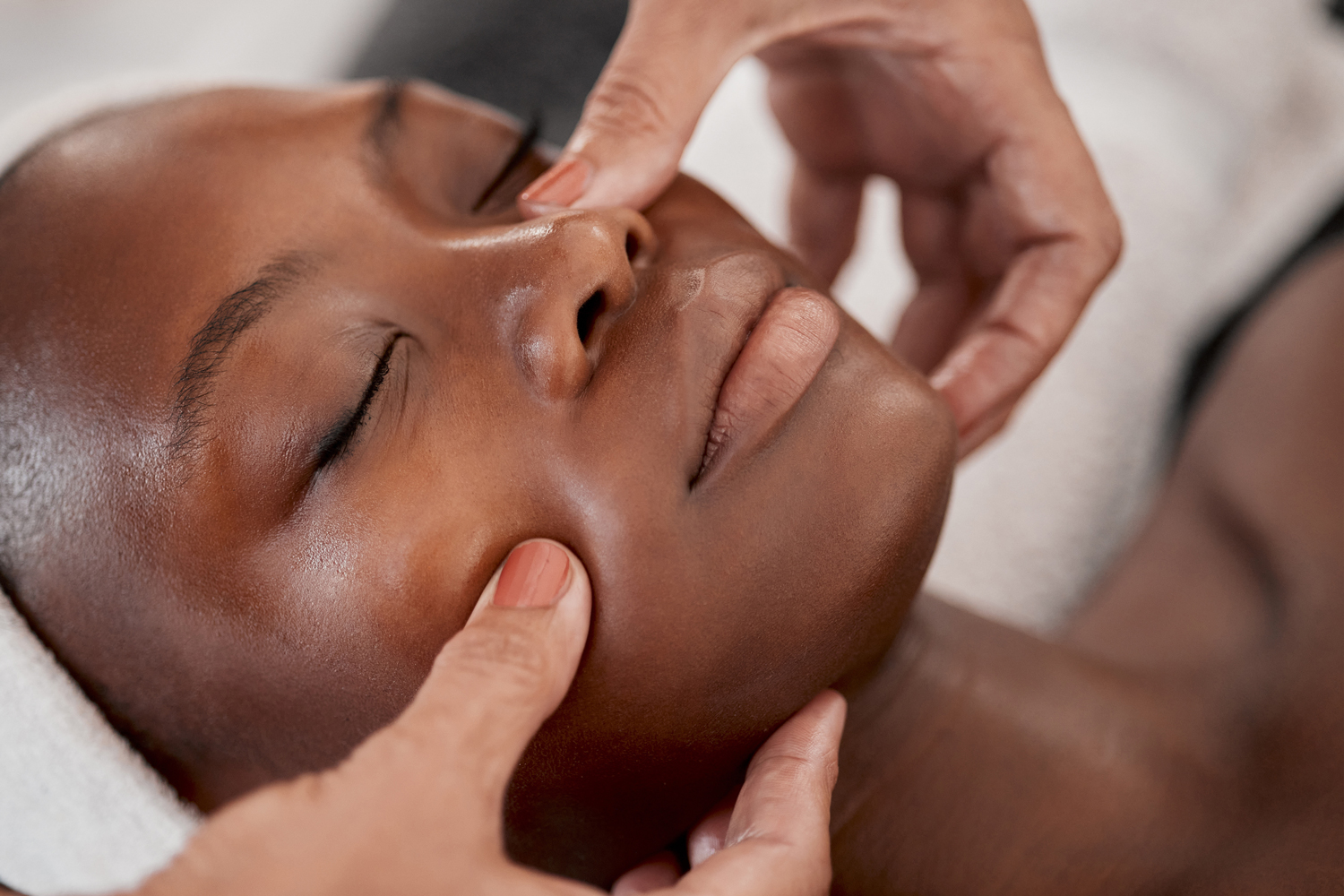
At Lymphyx in Beverly Hills, every lymphatic drainage session starts at the collarbones — before the puffy ankles, before the bloated abdomen, before whatever you actually came in for. The reason is anatomical: the collarbones sit over the place where lymph leaves its own network and re-enters the bloodstream, at the large veins at the base of the neck. Open the exit first, then the junctions nearer the trunk, then the area that feels swollen. That order is how Juanita Chabolla, licensed massage therapist and founder of Lymphyx, runs a sixty-minute wellness session (from $225) on Wilshire Boulevard, and it is what the seven seconds of footage below show.
The reel went up with a caption about plans and me time. The part worth explaining is the part nobody captions: why the hands go where they go, in the order they go there.
Where does the fluid actually go?
The lymphatic system is the body's return line. Fluid that circulation leaves behind in the tissue is collected into progressively larger vessels and carried back toward the bloodstream — not outward through the skin, and not into some reservoir. It re-enters the venous circulation at the base of the neck, in the region just above the collarbones, at what the physiology literature calls the great veins of the neck (Am J Physiol Heart Circ Physiol, 2009). Fluid moved from an ankle, an abdomen, or a cheek is being sent to that one junction. Every pathway in the body ends there.
Which is why the question clients ask most — "why are you at my neck when my legs are the problem?" — has a short answer. The neck is where the legs drain to.
Does the lymphatic system have a pump?
It is often said, and we have said it ourselves, that lymph has no pump of its own and simply moves when you move. The research is more interesting than that. Lymph is moved by a combination of outside forces — skeletal muscle contracting around the vessels, the pressure changes of breathing — and by the vessels themselves: the segments between the valves, called lymphangions, contract on their own and squeeze lymph forward (Scallan and colleagues, J Physiol, 2016). Those segments can switch between acting as a pump and acting as a passive pipe depending on the pressure along the vessel, so flow depends on both the vessel's own activity and the movement around it (Am J Physiol Heart Circ Physiol, 2009).
What that means on the table is modest and useful: the system is slow, it is helped along by movement and breath, and a session that follows the direction it already flows is working with something that is already trying to happen.
So why start at the neck when my legs are the problem?
This is how we order a session at the studio, and the reasoning Juanita gives for it. It is a description of our method, not a law we are claiming for the whole field.
- The collarbones and the neck first. Gentle, deliberate strokes just above the collarbones, opening the pathways before any deeper work. This is the part of the reel people notice, because the hands are nowhere near the area that was booked.
- Then the junctions nearer the trunk. Light, rhythmic work near the armpits, the abdomen, and the groin — the junctions fluid passes through on its way up and out.
- Only then the area you came in for. The legs, the arms, the face, worked toward the pathways that were just opened, so the fluid is guided along a route that is ready for it.
In the guide to a full post-operative session, Juanita put the reasoning for the order this way: "Skip the first part to save time and the rest of the session is pushing fluid toward a door that was never unlocked." The wellness version — same protocol, no operative note to honor, the whole body available — keeps exactly that order. It is why the first minutes of your session are spent nowhere near the area you booked for.
Is it relaxing, or is it clinical?
Both questions come up, usually from people who have had deep tissue work and expect the same intensity. Lymphatic work is inherently featherlight. The strokes are slow and directional, and check-ins on pressure are part of every session — if it is not right for you, say so in the moment and it changes. We have written separately about why the pressure is light and what it means if a "lymphatic" massage leaves marks; the short version is that firm is not a feature here. Without a surgeon's timeline to honor, the wellness session feels closer to a deep relaxation than a clinical visit, which is the "me time" the caption was talking about. The effect on fluid is temporary, which is why a monthly rhythm beats a one-off.
What the reel shows
Seven seconds, in the studio, with a client who agreed to be filmed. The sheet stays on, the eyes are covered, and the gloves go on before the first stroke. Then, in order: hands resting just above the collarbones, long flat strokes down the back, the ankle and the sole of the foot, the elbow and forearm, the hip. The order is the point.
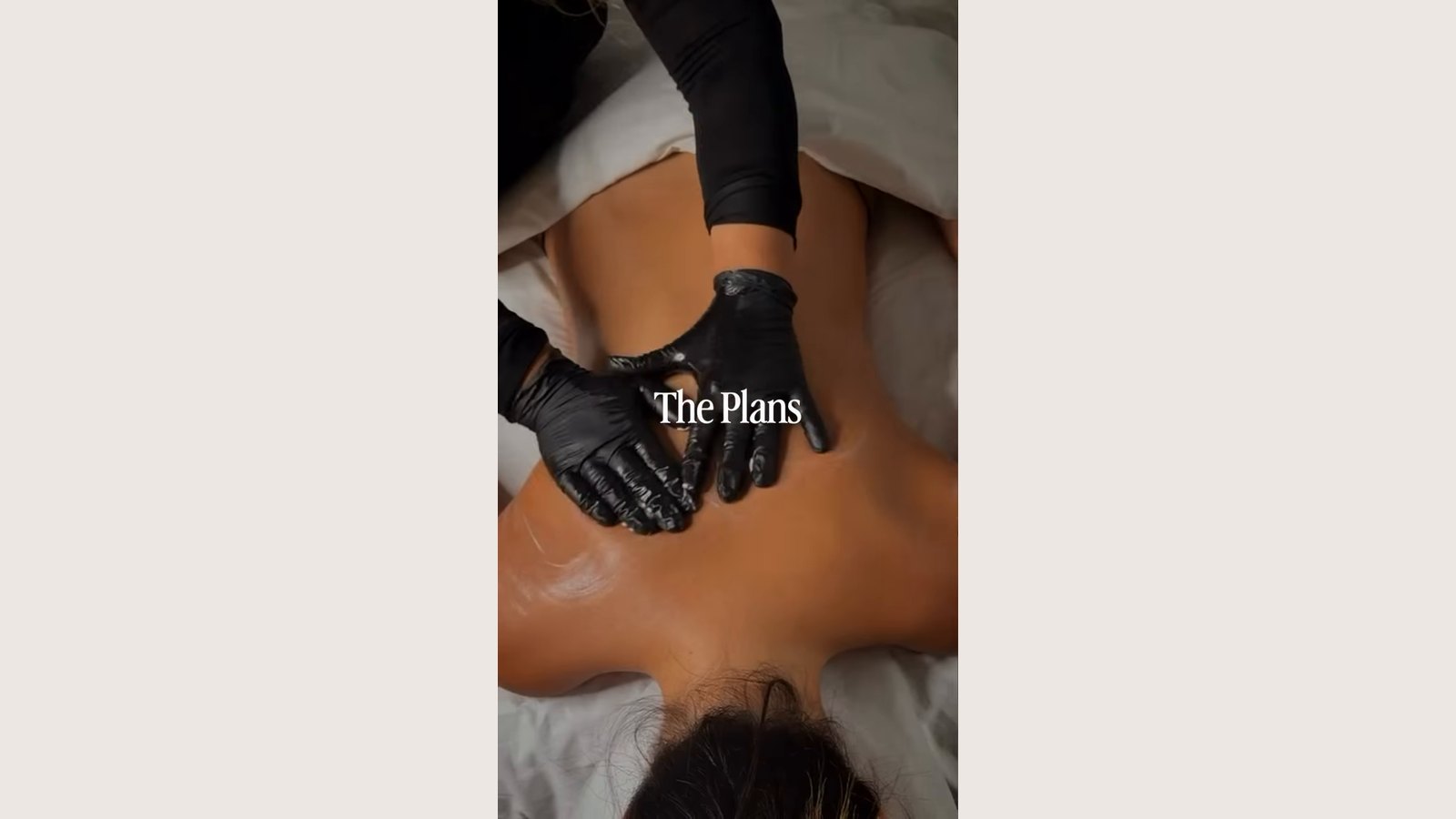 ▶ Watch the reel
Before you book in Beverly Hills
If you are recovering from surgery, this is not the session to start with: your surgeon's plan decides when drainage begins and how it is done, and that path starts at post-operative care. If you are pregnant, sessions are available after the first trimester with your OB's clearance. Everyone else books the wellness session directly — sixty, ninety, or one-hundred-twenty minutes, one client at a time, at 9150 Wilshire Boulevard in central Beverly Hills, with clients coming from Beverly Hills, West Hollywood, Century City, and the Westside of Los Angeles. However long you book, the first minutes are spent at the collarbones. Now you know why.